
Gonadotropin Releasing Hormone-1 (GnRH-1) neurons: the intriguing journey from nose to brain.
Correct development of the nose is necessary for the detection of environmental odorants but is also crucial for maturation and function of the reproductive system. In fact, during embryonic development, a population of neurons, called gonadotropin-releasing hormone-1 neurons (GnRH-1), migrate from the nose to the brain. Once in the brain, these neurons control the reproductive axis. Genetic defects that affect the formation of the nasal/olfactory structures, as well as migration, survival, and/or function of GnRH-1 neurons, lead to aberrant sexual development and sterility. Our understanding of who the stem cells are and what the embryonic origin is in the developing nose has only recently begun, which leaves many blanks yet to be filled.
Formation of the nose is the result of communication and interaction of contributing cells of different embryonic origin, in particular, placodal cells (which form most of the olfactory/vomeronasal epithelium) and neural crest cells (which give rise to bones, cartilage, and olfactory glia cells). Defects in craniofacial development, olfaction, and sexual development have been linked in a growing number of human syndromes.
The Vomeronasal Organ (VNO)
The vomeronasal organ (VNO) is a specialized chemosensory sensory structure in the nose that detects social and reproductive chemical cues and relays this information to the brain to regulate a broad spectrum of stereotypical behaviors. The neurons of the VNO form highly specialized circuits that influence social interactions, mating, aggression, and neuroendocrine responses.
Our lab uses the vomeronasal system as a model to understand how distinct types of neurons are generated, acquire their cellular identity, and assemble into functional neural circuits during embryonic development and in postnatal life. We investigate how neurogenesis, molecular identity, connectivity, and behavior emerge as sensory neurons differentiate and integrate into the brain.
Our work focuses on the genes, gene regulatory networks, and post-translational mechanisms that establish neuronal identity and functionality. By uncovering the molecular programs that build these sensory pathways, we aim to reveal fundamental principles of neural development and provide insight into how disruptions in these processes can lead to congenital and degenerative neurological disorders.
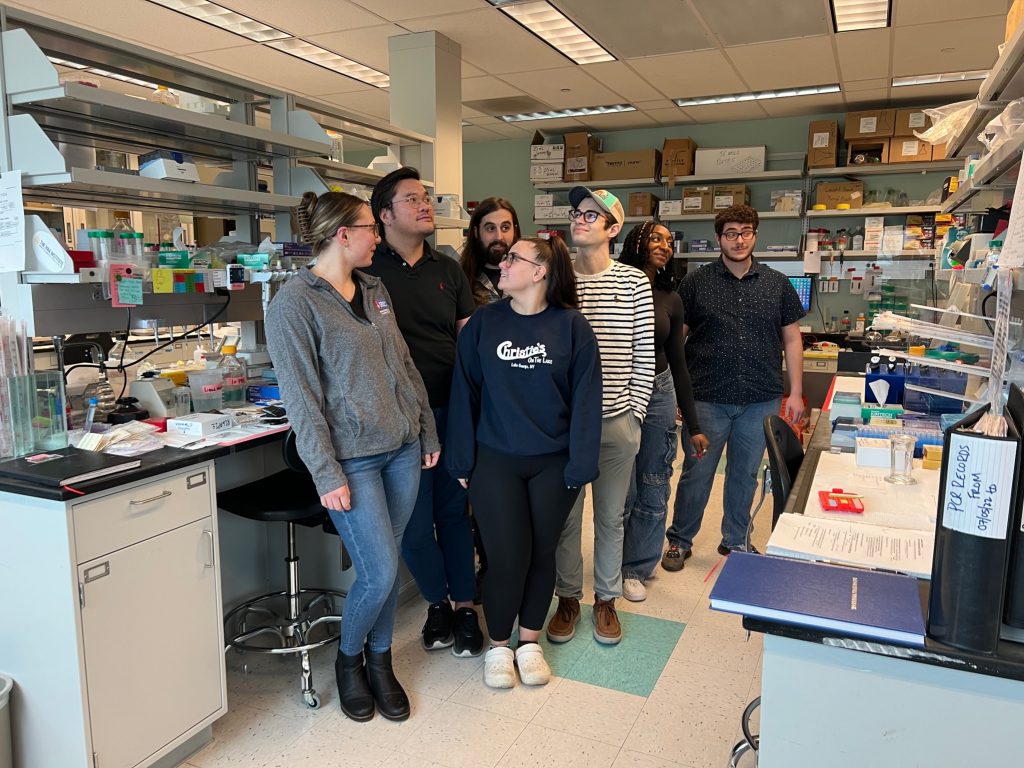
Our lab is interested in unraveling:
- What are the different cell populations in the nasal area, and what is their role during embryonic development?
- What is the role played by different cell types in the normal and pathological development of the olfactory and GnRH-1 system?
- How do neurons in the nose acquire their specific identity? What signals control their terminal differentiation?
- Which genes are involved, and what are the molecular mechanisms at the base of placodal/neural crest interaction and the determination of neurogenic niches?
Our investigative approach relies on genetically engineered model systems that recapitulate key aspects of human developmental pathologies, as well as experimental platforms that enable selective lineage tracing and genetic manipulation of specific cell populations.
Our lab is funded by:

2R01HD097331 (P.I.)
R01HD114827 (P.I.)